🎃 Halloween: History, Traditions, and Cultural Evolution
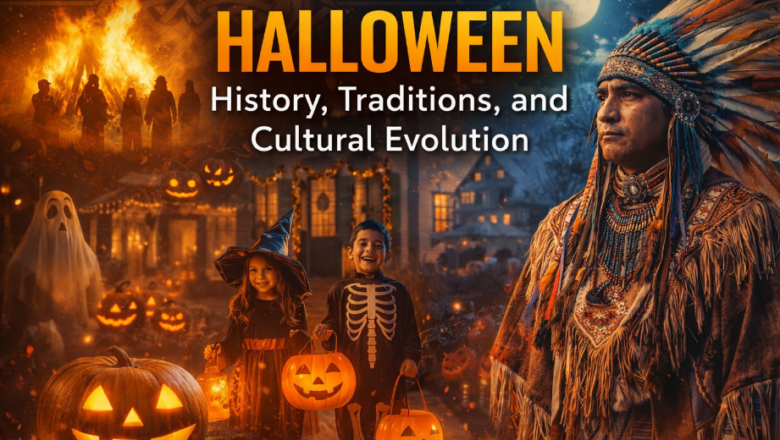
🎃 Halloween: History, Traditions, and Cultural Evolution
Halloween, celebrated every year on October 31, is one of the most visually striking and culturally rich festivals in the Western world. Known for costumes, pumpkins, and eerie decorations, Halloween is far more than a night of fun—it is a tradition deeply rooted in ancient beliefs, cultural blending, and evolving societal practices.
📜 Origins: The Ancient Festival of Samhain
Halloween traces its roots back over 2,000 years to the ancient Celtic festival of Samhain (pronounced “sow-in”), celebrated in regions that are now Ireland, the United Kingdom, and northern France.
The Celts believed that on the night of October 31, the boundary between the living and the dead became blurred. Spirits were thought to return to Earth, and people lit bonfires and wore costumes to ward off or confuse these spirits.
This ancient ritual laid the foundation for many Halloween customs we see today.
⛪ Christian Influence and Evolution
With the spread of Christianity, Samhain gradually merged with Christian observances. November 1 became *All Saints’ Day (All Hallows’ Day), and the night before was known as **All Hallows’ Eve, eventually shortened to *Halloween.
Traditions evolved:
- Dressing in costumes became more symbolic than protective
- “Souling” (going door-to-door for food/prayers) influenced modern trick-or-treating
- Carving turnips (later pumpkins in America) became part of folklore
🎃 The Story Behind the Jack-o’-Lantern
One of Halloween’s most iconic symbols, the jack-o’-lantern, comes from an Irish legend about a man named “Stingy Jack.” According to folklore, Jack tricked the devil and was doomed to wander the Earth with only a carved lantern to light his way.
When Irish immigrants brought this tradition to America, they discovered pumpkins—larger and easier to carve—leading to the modern glowing pumpkin faces we see today.
🛍️ Modern Halloween Traditions
Today, Halloween is a mix of ancient beliefs and modern entertainment:
- 👻 Costume Parties – People dress as ghosts, superheroes, or pop culture icons
- 🍬 Trick-or-Treating – Children collect candies from neighbors
- 🏠 Haunted Houses & Decorations – Homes and public spaces are transformed into spooky environments
- 🎬 Horror Entertainment – Movies and stories dominate the season
In the United States, Halloween has also become a major commercial and social event.
🪶 Native American Perspectives & Celebrations
Unlike mainstream American culture, Native American communities do not traditionally celebrate Halloween as a historical or spiritual festival. Their cultural practices are rooted in their own distinct spiritual beliefs, seasonal ceremonies, and ancestral traditions.
However, perspectives vary:
- Some Native communities participate in Halloween socially, especially in urban or mixed-cultural environments
- Others view it as a non-native tradition and prefer to focus on their own ceremonies tied to nature, harvest, and spirituality
- Storytelling traditions in Native cultures often involve spirits and the natural world, but these are deeply sacred and not commercialized like Halloween
It’s important to understand that Native American traditions are diverse and cannot be generalized into a single practice.
🌍 Global Spread of Halloween
Over time, Halloween has expanded beyond the United States:
- 🇬🇧 UK & Ireland – Strong historical roots, modern celebrations
- 🇯🇵 Japan – Costume culture and themed events
- 🇮🇳 India – Growing popularity in urban areas, especially among youth
- 🇪🇺 Europe – Increasingly adopted with local adaptations
The festival continues to evolve as cultures blend and reinterpret its meaning.
⚖️ Cultural Reflection
Halloween represents a fascinating blend of:
- Ancient pagan beliefs
- Christian traditions
- Immigration and cultural exchange
- Modern consumer culture
For some, it’s a fun celebration. For others, it raises questions about commercialization and cultural sensitivity.