The Art World’s Sherlock Holmes
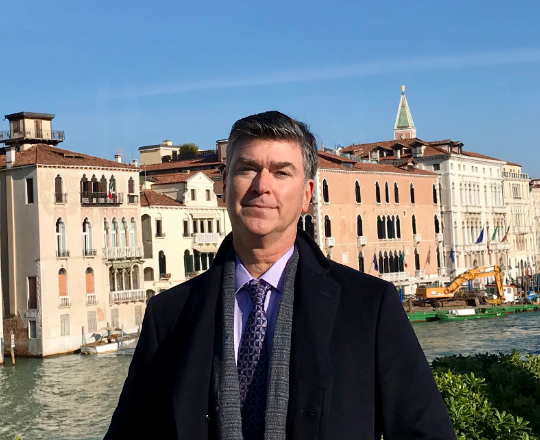
The Art World’s Sherlock Holmes
Inside the High-Stakes Career of Christopher A. Marinello
When a priceless masterpiece vanishes from a museum, or a family seeks to reclaim a painting looted by the Nazis during World War II, the person they call is rarely a gun-toting action hero. More often than not, they call a sharp-dressed, fast-talking lawyer originally from Brooklyn. Christopher A. Marinello is widely regarded as one of the world’s foremost experts in recovering stolen, looted, and missing works of art.
Who is Christopher Marinello?
Born and raised in Brooklyn, New York, Marinello’s initial ambition was to be an artist. After attending art school and realizing his creative talents lay elsewhere, he pivoted to law. He spent over two decades working as a tough commercial litigator in New York City. However, his passion for the arts never faded. Slowly, he began merging his legal expertise with his love for culture, taking on cases for artists, galleries, and collectors, which eventually led him into the highly specialized and opaque field of art law.
He served as the General Counsel and lead negotiator for the Art Loss Register in London for several years before venturing out to establish his own independent practice. In 2013, he founded Art Recovery International (ARI), a specialist firm with offices in Venice and London. ARI operates globally, representing museums, insurance companies, private collectors, dealers, and individuals who have fallen victim to art theft or historical looting.
How He Works: The Art of the Deal
The world of art recovery is less about breaking down doors and more about meticulous historical research, deep legal strategy, and psychological negotiation. Marinello’s methodology operates at the intersection of private investigation, international law, and high-stakes mediation.
1. Exhaustive Provenance Research
Before any recovery can begin, Marinello and his team must definitively prove ownership. This involves diving into centuries-old archives, auction catalogs, gallery records, and historical documents to trace the “provenance” (the chronological history of ownership) of a piece. To aid in this global effort, Marinello also founded the Artive Database, a non-profit technology platform designed to register and protect cultural property worldwide, ensuring stolen items are flagged before they can be sold.
2. Strategic Negotiation
Stolen art often ends up in the hands of “good faith” buyers—people who purchased a piece not knowing its illicit history. Because international property laws vary wildly from country to country (and the statute of limitations frequently protects the new owners), dragging a case through the courts can take decades and millions of dollars. Marinello excels as a negotiator, acting as a bridge between the original victim and the current possessor. His approach is notoriously pragmatic: he applies intense legal and public pressure to force possessors to the table, often negotiating a settlement, a buy-out, or a charitable donation that resolves the dispute out of court.
3. Collaboration with Law Enforcement
While Marinello operates in the private sector, he works hand-in-hand with global law enforcement agencies, including the FBI’s Art Crime Team, Scotland Yard’s Art and Antiques Unit, and Italy’s Carabinieri. When a criminal syndicate is involved, or when stolen goods cross international borders, he helps authorities coordinate sting operations, tracks down informants, and provides the crucial evidentiary groundwork needed for police to seize the artworks safely.
Major Achievements and Landmark Cases
Marinello has successfully recovered works by some of history’s greatest masters, including Pablo Picasso, Salvador Dalí, Rembrandt, Henri Matisse, and Andy Warhol. His career recoveries total well over half a billion dollars.
The Gurlitt Hoard and Matisse’s “Femme Assise”
Marinello’s most famous case involves Henri Matisse’s 1921 painting, Femme Assise (Seated Woman). The painting had belonged to the legendary Jewish art dealer Paul Rosenberg before it was seized by the Nazis during the occupation of Paris in 1941. For over seven decades, it was considered lost to history.
In 2012, authorities discovered a massive trove of undocumented art in the Munich apartment of Cornelius Gurlitt, the reclusive son of a prominent Nazi-era art dealer. Femme Assise was found among the masterpieces. Marinello represented the Rosenberg heirs and spearheaded a relentless, high-profile legal and media campaign against the German government to secure its immediate return. In 2015, after intense negotiations and provenance verification, he successfully repatriated the painting to the Rosenberg family. The case marked a historic and emotional victory for Holocaust restitution.
Pro Bono Work and Global Restitution
Beyond high-profile Nazi-looted art, Marinello handles cases involving works stolen from small churches, regional museums, and independent artists. He frequently undertakes pro bono work, ensuring that non-profit organizations, religious institutions, and victims with limited means still have access to world-class legal and investigative representation.
Conclusion
Christopher Marinello has fundamentally reshaped the landscape of the international art market. By making it increasingly difficult to sell stolen or looted art without detection, he and his organization are forcing dealers, galleries, and auction houses to perform much stricter due diligence. He remains a formidable force in the art world, proving that with enough persistence and legal acumen, lost history can indeed be found and brought back home.