Deadly Strike in Southern Lebanon Raises Alarming Questions Over Journalist Safety
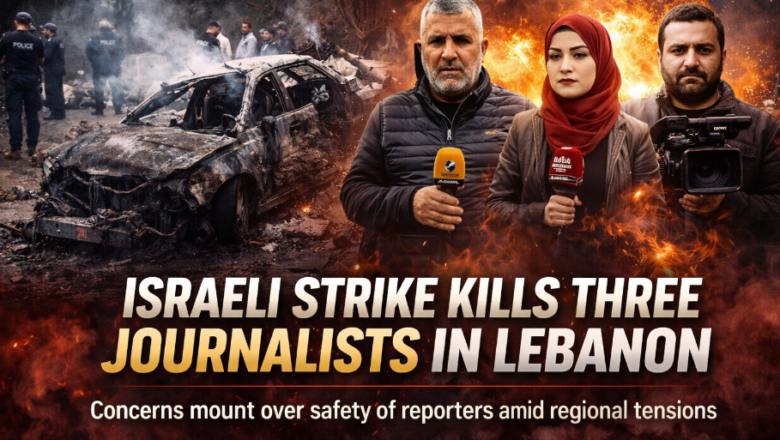
A recent airstrike in southern Lebanon has sparked global concern after three journalists were killed in what many are calling a deeply troubling incident amid ongoing regional tensions.
The victims — Ali Shoeib of Al Manar TV, along with reporter Fatima Ftouni and cameraman Mohamed Ftouni from Al Mayadeen — lost their lives when their vehicle was struck near the town of Jezzine around midday. The incident has intensified fears over the growing risks faced by media professionals operating in conflict zones.
The Israel Defense Forces confirmed carrying out the strike, stating that Ali Shoeib was allegedly affiliated with Hezbollah and had been involved in activities beyond journalism. According to the IDF, Shoeib was part of the group’s elite Radwan Force and had used his media role as a cover for intelligence-related operations. However, no public evidence has been provided to substantiate these claims, and no explanation was offered regarding the deaths of the other two journalists.
Hezbollah strongly rejected the allegations, condemning the attack as a deliberate and unjustified targeting of media personnel. The group described the strike as a criminal act and accused Israel of attempting to deflect responsibility through unverified claims.
Lebanon’s leadership also responded with sharp criticism. President Joseph Aoun labeled the incident a “brazen crime,” emphasizing that journalists are civilians protected under international law. Prime Minister Nawaf Salam echoed these concerns, calling the strike a clear violation of international humanitarian principles designed to safeguard journalists during times of war.
The incident has drawn attention from international watchdogs as well. The Committee to Protect Journalists warned of an increasingly dangerous environment for reporters in Lebanon. The organization highlighted what it described as a recurring pattern of accusations against journalists without sufficient evidence, raising serious questions about accountability and transparency in conflict reporting.
This strike marks another flashpoint in an already volatile situation in the region, where tensions have escalated significantly in recent weeks. It also underscores a broader and deeply concerning issue — the safety of journalists in war zones, where the line between combatant and civilian is sometimes contested, often with deadly consequences.
As investigations and international reactions continue, the incident is likely to fuel ongoing debates about press freedom, the rules of engagement in armed conflict, and the urgent need to protect those who risk their lives to report from the frontlines.