2019–2026: The Years Earth Sounded the Alarm – A Global Climate Crisis
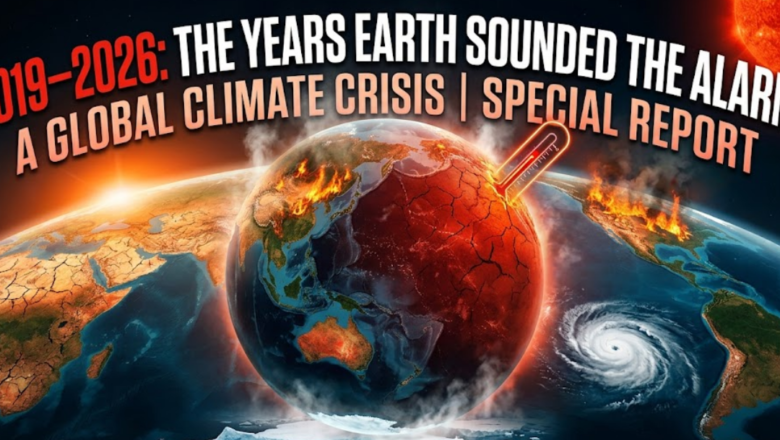
A Special Report by thenews9.org
Over the past seven years, the conversation around climate change has shifted dramatically. What were once dire predictions for the distant future have become our daily, lived reality. The period from 2019 to 2026 will undoubtedly go down in history as the era when the Earth stopped warning us and started reacting, fundamentally altering ecosystems, economies, and human lives across the globe.
Here is a comprehensive look at the unprecedented climatic shifts that defined this critical window in our planet’s history.
The Era of Record-Breaking Heat
The most defining characteristic of the 2019–2026 period was the relentless rise in global temperatures. According to major meteorological organizations, the decade culminating in 2025 was the warmest ever recorded.
The year 2024 stood out as a terrifying milestone, officially recorded as the hottest year in human history, driven by a historically strong El Niño weather pattern. Even as the cooling La Niña phenomenon emerged in 2025 and early 2026, global temperatures refused to plummet to historical norms. Instead, the Earth remained consistently warm, with average global temperatures hovering dangerously close to 1.43°C above pre-industrial levels. We are now teetering on the edge of the crucial 1.5°C threshold set by the Paris Agreement.
Boiling Oceans and Disappearing Ice
While surface temperatures made headlines, the true crisis was unfolding beneath the waves. The world’s oceans absorb approximately 91% of the excess heat trapped by greenhouse gases. By 2025, ocean heat content reached unimaginable new highs.
This deep-sea warming accelerated the melting of polar ice caps and glaciers at terrifying rates. The rapid loss of ice in Greenland and the Antarctic directly contributed to a significant and noticeable rise in global sea levels during this seven-year span, threatening coastal cities and island nations with increased flooding and erosion.
Extreme Weather Becomes the New Normal
Between 2019 and 2026, the term “once-in-a-century event” lost its meaning. Extreme weather anomalies became standard seasonal occurrences:
- Searing Heatwaves: Prolonged, deadly heatwaves baked Europe, North America, and particularly Asia, which continues to warm at nearly double the global average rate.
- Uncontrollable Wildfires: From the devastating Australian bushfires at the turn of the decade to massive blazes across Canada, California, and Southern Europe, millions of acres of forest were reduced to ash, choking entire continents in thick smoke.
- Flash Floods and Droughts: The water cycle became highly volatile. Regions historically prone to rain suffered multi-year mega-droughts, devastating agriculture. Conversely, other areas experienced catastrophic flash floods, washing away infrastructure and displacing millions.
The Greenhouse Gas Surge
Despite global summits and pledges, the root cause of the crisis—greenhouse gas emissions—continued to plague the atmosphere. The concentration of Carbon Dioxide (CO2), Methane, and Nitrous Oxide reached record levels during this period. The brief, temporary dip in emissions during the early pandemic years was quickly erased by a rapid industrial rebound, locking in the warming effects we are witnessing today.
The Path Forward
The 2019–2026 timeline serves as a stark, undeniable wake-up call. The Earth’s climate system has been destabilized. However, this period also saw a massive surge in global awareness, the rapid scaling of renewable energy technologies, and a growing consensus that the transition away from fossil fuels is not just necessary, but inevitable.
As we move deeper into the decade, the choices made by governments, corporations, and individuals will determine whether these seven years were the beginning of an irreversible catastrophe, or the turning point where humanity finally united to heal its only home.