Escalation in the Middle East: U.S. Issues Hormuz Ultimatum as Strikes Shake Iran and the Wider Region
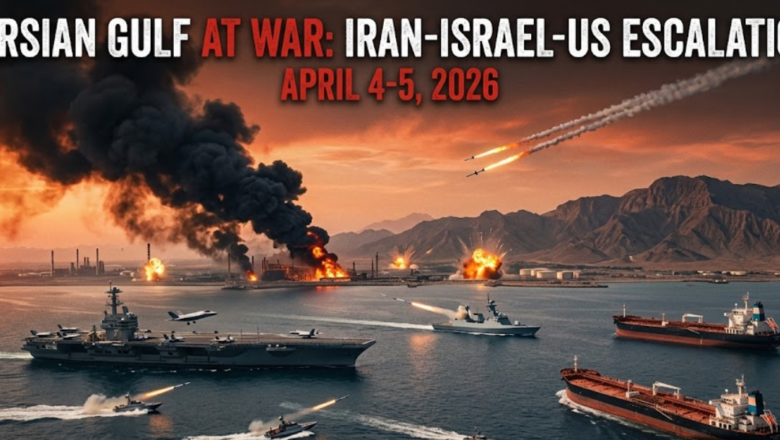
April 5, 2026 — Tensions in the Middle East reached a boiling point this weekend as a multi-front conflict involving the United States, Israel, and Iran intensified. Following a series of devastating airstrikes across Iranian territory and a dramatic rescue of a downed U.S. pilot, Washington has issued a stark 48-hour ultimatum to Tehran, threatening massive infrastructure attacks if the critical Strait of Hormuz remains closed.
As diplomatic channels strain and regional spillover affects neighboring nations, the world watches to see if the escalating violence will trigger a broader, uncontrollable war.
The 48-Hour Ultimatum
The geopolitical epicenter of the current crisis lies in the Strait of Hormuz, a vital maritime chokepoint through which roughly a fifth of global oil supplies flow. On Sunday, U.S. President Donald Trump took to social media to issue a direct 48-hour ultimatum to Tehran. He warned that if the strait is not reopened by Tuesday, the U.S. will launch heavy strikes targeting Iranian infrastructure, ominously referring to the impending assault as “Power Plant Day, and Bridge Day.”
Iran’s central military command quickly dismissed the threat, labeling the ultimatum as “helpless” and “unbalanced.” State media broadcasted fierce warnings that any further escalation by the U.S. and Israel would turn the entire region into “a hell.” Despite the fiery rhetoric, back-channel diplomacy remains active, with Omani and Iranian deputy foreign ministers reportedly holding talks to find a resolution for vessels transiting the strait.
High-Stakes Strikes and Nuclear Jitters
The ultimatum follows a weekend of punishing military operations. President Trump announced that a massive strike in Tehran successfully eliminated “many” Iranian military leaders. Concurrently, joint U.S.-Israeli strikes targeted a vital petrochemical hub in southwestern Iran, resulting in at least five deaths, according to Iranian officials.
Perhaps the most alarming development occurred near the active Bushehr nuclear power plant. Following a fourth airstrike in close proximity to the facility, Iran’s Foreign Minister Abbas Araghchi sent a formal letter to the United Nations, warning of a severe and imminent risk of radioactive contamination. The threat level prompted Russia to announce the immediate evacuation of its remaining technical staff from the plant.
Behind Enemy Lines: A Daring Rescue
Amid the barrage of airstrikes, a significant tactical victory was achieved early Sunday morning. U.S. forces successfully rescued a U.S. Air Force officer whose F-15 fighter jet had been shot down over Iranian territory.
The airman, the second and final member of the downed two-person crew to be recovered, was extracted in a high-risk operation. An Israeli military official later confirmed that Israel played a crucial role in the mission, providing actionable intelligence and temporarily halting their own airstrikes in the designated search area to ensure the rescue team’s safety.
Regional Spillover and Domestic Unrest
The shockwaves of the Iran-Israel conflict are being felt far beyond their borders, threatening to pull neighboring countries into the fray:
- Lebanon: On Easter Sunday, Israel launched a heavy wave of strikes against Hezbollah targets across southern Lebanon, the Bekaa Valley, and Beirut’s southern suburbs. The Lebanese health ministry reported tragic civilian casualties, including a four-year-old girl killed in a strike on the town of Kfar Hatta.
- Kuwait: Kuwaiti air defenses were forced to intercept hostile drone and missile threats over the weekend. A separate drone strike ignited a fire at Kuwait’s Shuwaikh oil sector complex, though authorities reported no injuries.
- Iraq: In response to the violence, Iraq completely closed its Shalamcheh border crossing with Iran. The closure came after strikes hit a passenger reception area on the Iranian side of the border, severely wounding at least five Iraqi citizens.
Meanwhile, the toll of the multi-front war is sparking fierce domestic backlash within Israel. Over the weekend, large-scale anti-war protests erupted in Tel Aviv and other major cities, with demonstrators demanding an immediate end to the conflict. Citing a wartime security ban on large assemblies, Israeli police moved in to forcefully disperse the crowds, resulting in numerous arrests.
As the clock ticks down on Washington’s ultimatum, the international community is left bracing for what could be a defining—and devastating—week in Middle Eastern history.