NASA Partners with Intuitive Machines to Advance Artemis Moon Mission
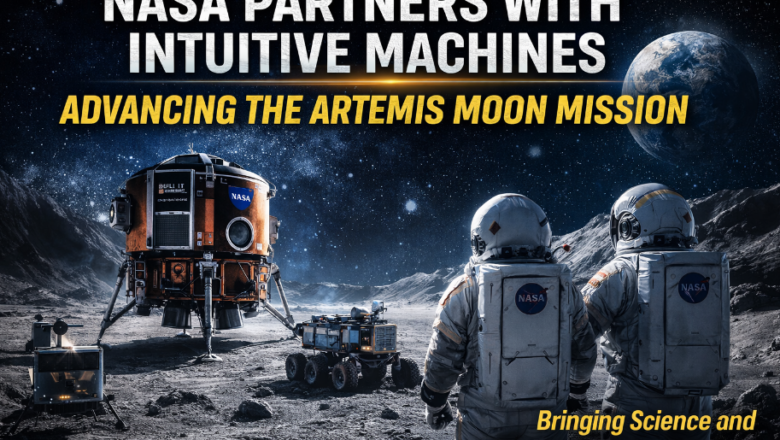
In a significant step toward humanity’s return to the Moon, NASA has selected Intuitive Machines to deliver critical scientific instruments and technology to the lunar surface. This mission is part of NASA’s broader Artemis program, which aims to establish a sustainable human presence on the Moon and pave the way for future missions to Mars.
The contract, valued at $180.4 million, will see Intuitive Machines transport a suite of payloads to the Moon’s South Pole region by the end of the decade. This marks another milestone in NASA’s strategy of collaborating with private companies to accelerate space exploration and innovation.
At the heart of this mission is a collection of advanced scientific tools designed to better understand the Moon’s environment. These include instruments that will study the composition of lunar soil, detect the presence of water and ice, and measure radiation levels that could affect future astronauts. Together, these experiments will provide valuable insights into how humans can safely live and work on the Moon for extended periods.
The mission will also deploy robotic rovers capable of navigating the Moon’s challenging terrain. These rovers will carry specialized sensors to analyze the lunar surface and test new exploration technologies. Additionally, a laser reflector device will be placed on the Moon to assist with navigation and future mission planning.
One of the more unique elements of the mission is a lunar time capsule, designed to preserve a vast archive of human knowledge. This symbolic addition highlights the broader vision of space exploration—not just as a scientific endeavor, but as a step toward preserving and extending human civilization beyond Earth.
This initiative is part of NASA’s Commercial Lunar Payload Services (CLPS) program, which allows private companies to deliver payloads to the Moon. By leveraging commercial partnerships, NASA is able to reduce costs, increase mission frequency, and foster innovation within the space industry.
The importance of this mission goes beyond immediate scientific gains. Understanding the Moon’s South Pole—an area believed to contain water ice—is crucial for establishing a long-term human presence. Water can be used for drinking, oxygen production, and even fuel, making it a key resource for sustainable exploration.
Ultimately, this mission represents a vital step in NASA’s long-term vision. By studying the Moon and testing new technologies, space agencies are laying the groundwork for future human exploration of Mars and beyond.