A World in Limbo: Diplomacy in Islamabad, Devastation in Beirut, and a Holy Truce in Ukraine
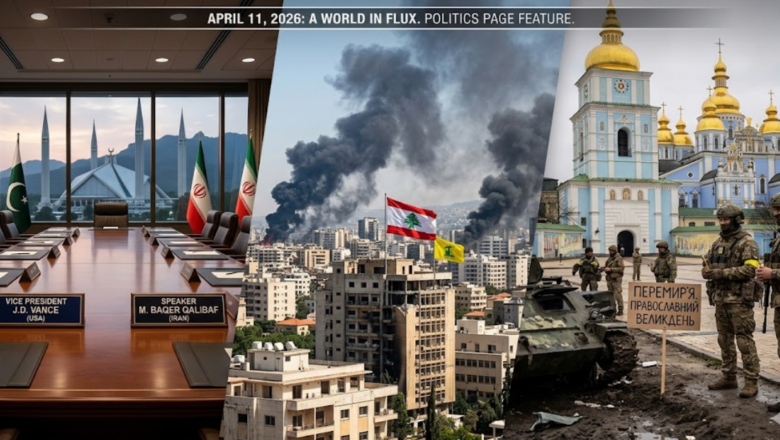
The global geopolitical landscape has reached a fever pitch today as three distinct, high-stakes military and diplomatic events converge. From the high-security meeting rooms of Islamabad to the burning skylines of Beirut and the frozen trenches of Eastern Europe, the next 48 hours may define the remainder of the decade.
1. The Islamabad Summit: A “Make-or-Break” Moment for the Middle East
In Pakistan, the world holds its breath as high-level delegations from the United States and Iran convene for the first day of formal negotiations. Led by U.S. Vice President JD Vance and Iranian Parliament Speaker Mohammad Baqer Qalibaf, the talks aim to transform a fragile two-week ceasefire into a permanent regional settlement.
The U.S. position remains firm: the return of enriched uranium stocks is a non-negotiable prerequisite for the lifting of economic sanctions. Meanwhile, the Trump administration has signaled its intent to secure the Strait of Hormuz—a vital global energy artery—through “any means necessary.”
2. The Lebanon Paradox: Dialogue Amidst Destruction
While diplomats talk peace in Pakistan, the Levant remains a theater of brutal kinetic warfare. Despite an agreement to begin formal state-to-state peace talks between Israel and the Lebanese government in Washington next Tuesday, the Israeli Defense Forces (IDF) have intensified operations against Hezbollah.
The conflict has reached a grim peak this week, with strikes on Beirut resulting in the highest single-day casualty rates of the war. This “split-track” reality—negotiating with the state while hammering its most powerful militia—leaves the future of Lebanese stability in a state of extreme uncertainty.
3. The Orthodox Easter Ceasefire: A Brief Respite in Ukraine
In a rare moment of humanitarian coordination, a theater-wide ceasefire has been declared in the Russia-Ukraine conflict to observe Orthodox Easter.
- Effective Time: 4:00 PM Moscow Time, April 11, 2026.
- Duration: 36 hours.
- Strategic Context: While the guns may fall silent for the holiday, military analysts note that both sides have utilized the lead-up to this pause to reinforce strategic positions near Zaporizhia, suggesting that the cessation of hostilities is strictly ceremonial.
Global Conflict Snapshot: April 11, 2026
| Front | Primary Actors | Status | Key Risk Factor |
|---|---|---|---|
| Persian Gulf | U.S. vs. Iran | Ceasefire | Nuclear enrichment deadlock |
| Levant | Israel vs. Hezbollah | Active War | Humanitarian crisis in Beirut |
| Eastern Europe | Russia vs. Ukraine | Holiday Truce | Rapid re-armament during pause |
Economic Implications: The Cost of Uncertainty
The political volatility is manifesting sharply in global markets. The restricted flow of vessels through the Strait of Hormuz (currently limited to 15 per day) has caused a “maritime logjam,” driving oil prices and shipping insurance to record highs. Energy experts warn that if the Islamabad talks fail to yield a breakthrough regarding the Strait, the global economy could face a supply shock reminiscent of the 1970s.
The Outlook
The convergence of these events marks April 11 as a historic pivot point. Whether the “Islamabad Spirit” can overcome decades of animosity, or if the localized truces in Europe and the Gulf are merely the “calm before a greater storm,” will depend on the resolve of the leaders currently behind closed doors.