The Islamabad Muddle: Pakistan’s High-Stakes Gamble in the US-Iran Ceasefire
By thenews9.org April 10, 2026
Just 90 minutes before a catastrophic regional war was set to ignite, Pakistan appeared to have pulled off the diplomatic miracle of the decade. But as the dust settles on the two-week ceasefire between the United States and Iran, a growing chorus of political analysts and international officials are asking a pointed question: Did Pakistan secure a peace deal, or did it merely manufacture a dangerous misunderstanding?
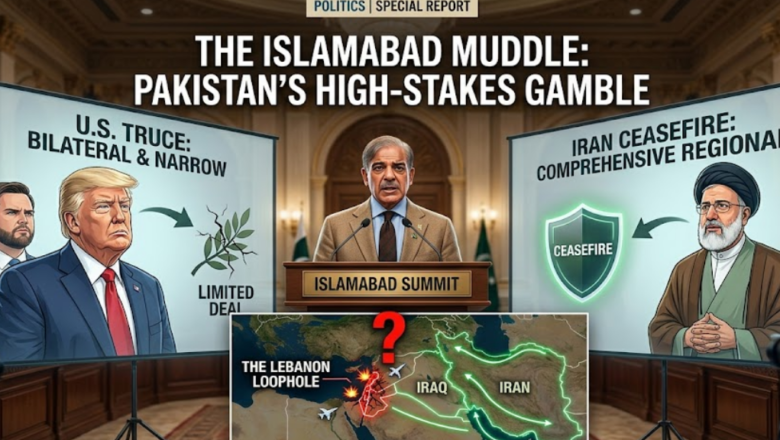
A Tale of Two Agreements
The controversy centers on what is being called the “Lebanon Loophole.” Following the announcement of the truce on April 8, Pakistani Prime Minister Shehbaz Sharif stood before the cameras to declare a total cessation of hostilities that was “effective everywhere”—crucially including the Lebanon front.
However, the celebratory mood in Islamabad was short-lived. Within hours, U.S. President Donald Trump and Vice President JD Vance clarified that the agreement was strictly bilateral between the U.S. and Iran. Simultaneously, Israel launched “Operation Eternal Darkness,” a series of devastating strikes against Hezbollah positions in Lebanon, claiming the ceasefire did not apply to them.
The “Fault” Argument: Diplomatic Deception or Desperation?
Critics and some regional analysts have begun to point the finger at Pakistan’s Ministry of Foreign Affairs. The accusation is that in its haste to avert a global energy crisis and a direct U.S. strike on Iranian soil, Islamabad may have “muddled” the negotiations.
“There is a growing suspicion among diplomatic circles that Pakistan may have presented slightly different versions of the draft to each side,” says Dr. Arash Rahim, a senior fellow at the Middle East Institute. “To Tehran, it was framed as a comprehensive regional cooling-off. To Washington, it was presented as a narrow, direct truce. By over-promising to both, they stopped the bombs for 48 hours, but they may have damaged their long-term credibility.”
Israeli officials have been more blunt, with their representative to the UN suggesting that Pakistan acted as an “unreliable narrator” in the process.
The Case for the Defense
While the “muddle” has caused friction, many in the international community argue that “fault” is the wrong word. Supporters of Pakistan’s mediation efforts argue that the country did what no other power could: bring two hostile nuclear-adjacent powers to the table under extreme duress.
“The reality is that Pakistan saved thousands of lives this week,” argued a spokesperson for the Arab League. “If there is a misunderstanding regarding Lebanon, it is a secondary issue compared to the total war that was avoided on Tuesday night.”
The U.S. administration has taken a middle-ground approach. Vice President Vance recently described the discrepancy as a “legitimate misunderstanding,” shifting the blame slightly toward Iranian interpretation rather than Pakistani malice.
The Islamabad Summit: A Moment of Reckoning
The true test of Pakistan’s diplomacy begins today, April 10. High-level delegations from Washington and Tehran are currently arriving in Islamabad for an emergency summit.
The goal is to formalize the 10-point plan and, more importantly, to define the exact geographical boundaries of the ceasefire. If Pakistan can successfully bridge the gap between the U.S. demand for a narrow truce and Iran’s demand for regional protection for its allies, it will go down as the greatest diplomatic triumph in the nation’s history.
If they fail, the “Islamabad Muddle” may be remembered as the spark that led to an even larger conflagration.