Protecting Your Heart: A Guide to Causes and Prevention
Protecting Your Heart: A Guide to Causes and Prevention
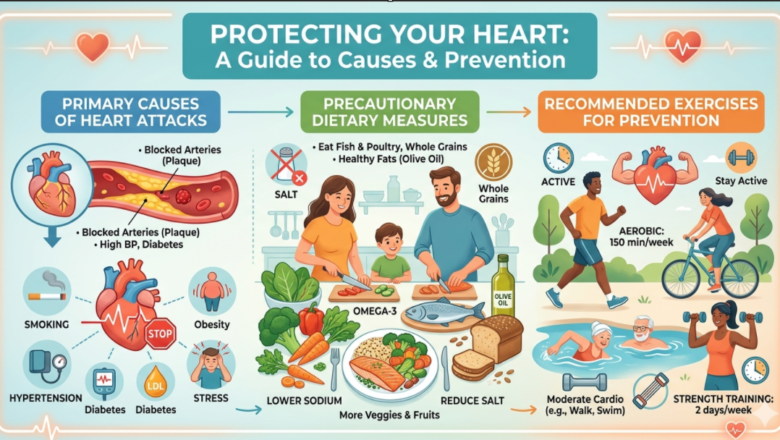
Heart attacks are often the result of gradual, silent damage to the arteries rather than sudden, random events. Understanding the primary causes and adopting proactive lifestyle changes in diet and exercise can significantly reduce your risk.
Primary Causes of Heart Attacks
A heart attack, or myocardial infarction, occurs when blood flow to the heart muscle is severely reduced or blocked, typically by a buildup of plaque—fat and cholesterol—in the coronary arteries. Medical conditions play a major role, specifically hypertension (high blood pressure) which strains the heart, high LDL cholesterol which leads to blockages, and diabetes which damages blood vessels over time.
Lifestyle factors are equally critical. Smoking remains one of the largest risks as it damages artery linings and reduces blood oxygen. Obesity and a sedentary lifestyle further weaken the cardiovascular system. Other contributing factors include family history, advancing age (men over 45, women over 55), chronic stress, and excessive alcohol consumption.
Precautionary Dietary Measures
What you eat directly impacts controllable risk factors like weight, blood pressure, and cholesterol. To protect your heart, you should prioritize proteins like fish rich in Omega-3, skinless poultry, legumes, and nuts while avoiding processed meats like bacon and sausage. For grains, choose whole options like oatmeal and brown rice over refined white flour and sugary pastries.
Focus on healthy unsaturated fats found in olive oil and avocado rather than saturated or trans fats found in butter and lard. Your diet should be rich in a variety of fresh or frozen fruits and leafy green vegetables. To manage blood pressure, it is essential to reduce sodium intake to less than 2,300 mg per day. Practicing portion control and checking food labels for “low-sodium” or “no-salt-added” options are also key habits for long-term heart health.
Recommended Exercises for Prevention
Regular physical activity strengthens the heart muscle and improves overall circulation. Experts recommend at least 150 minutes per week of moderate-intensity aerobic exercise. Activities like brisk walking, cycling, swimming, or dancing are excellent choices; you should feel warm and slightly out of breath but still able to hold a conversation.
In addition to cardio, resistance or strength training should be performed at least two days a week using weights, resistance bands, or body-weight exercises like squats. It is important not to hold your breath during these movements to avoid blood pressure spikes. Finally, incorporating flexibility and balance work through yoga or stretching improves musculoskeletal health, making it easier to maintain a consistent routine. Always consult a healthcare professional before starting a new exercise regimen, especially if you have existing health conditions.