The 2026 Oil Shock Will Be the Ultimate Catalyst for the EV Revolution
Published by thenews9.org
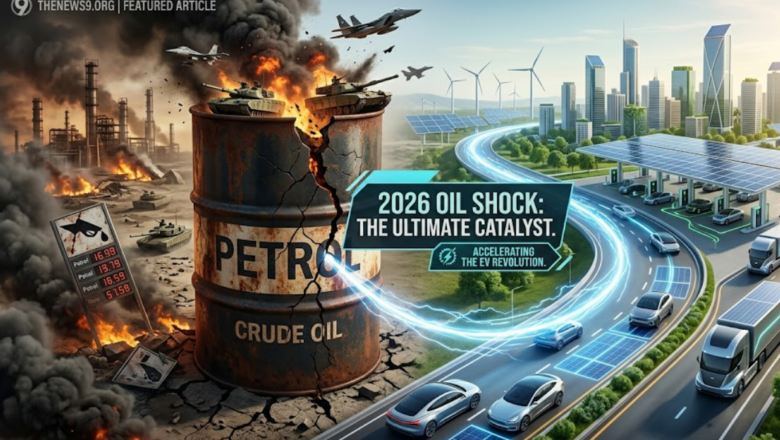
Historically, every major global energy crisis has forced a leap in innovation. The 1970s oil shocks gave the world smaller, more fuel-efficient cars. But the ongoing conflict between Iran, the United States, and Israel—and the resulting blockade of the Strait of Hormuz—is poised to do something much more dramatic.
This is no longer just a spike in petrol prices. It is the breaking point for global oil dependency. As crude oil markets panic and prices at the pump shatter records, the transition to Electric Vehicles (EVs) is rapidly shifting from a slow-moving environmental goal to an urgent matter of national security.
Here is why the world will look vastly different for EV technology when the dust settles.
1. The Narrative Shift: From “Green” to “Grid Security”
For the past decade, the primary argument for buying an EV has been environmental sustainability. The current war changes that narrative overnight. When global supply chains can be held hostage by a single blocked strait in the Middle East, nations realize that relying on imported fossil fuels is a massive strategic vulnerability.
In the post-war landscape, expect governments to stop pitching EVs solely as a way to fight climate change. Instead, adopting EV technology and building independent, renewable energy grids will be framed as a patriotic duty and a cornerstone of economic survival.
2. The End of Petrol Subsidies, The Rise of EV Mandates
Right now, governments worldwide are bleeding billions trying to subsidize fuel costs to prevent public outrage.
Moving forward, policymakers will likely realize it is far cheaper in the long run to heavily subsidize EV purchases and home solar-charging systems. Rather than trying to artificially lower the price of a dying resource, expect to see aggressive tax rebates for electric vehicles and potentially accelerated timelines for banning the sale of new internal combustion engine (ICE) cars.
3. Commercial Fleets Will Electrify Instantly
For everyday consumers, high petrol prices are painful. But for the logistics industry, shipping companies, and supermarket chains, volatile diesel prices completely wipe out profit margins.
Commercial industries cannot afford to let their supply chains be dictated by Middle Eastern geopolitics. We are about to witness businesses aggressively phasing out diesel trucks and delivery vans in favor of electric commercial vehicles. The demand for electric semi-trucks and heavy-duty battery technology will skyrocket as the corporate world demands energy certainty.
4. The Next Geopolitical Battle: Battery Tech
While EVs solve the oil problem, they create a new one: the intense demand for critical minerals like lithium, cobalt, and nickel. World leaders will quickly realize that trading a reliance on the Middle East for oil for a reliance on foreign nations for battery minerals is just swapping one vulnerability for another.
This realization will trigger a massive, government-funded race in EV technology:
- Solid-State Batteries: Billions in funding will pour into developing solid-state batteries, which are safer, charge faster, and can be made with more abundant materials.
- Sodium-ion Technology: Expect a surge in research for batteries that bypass rare earth metals entirely, using cheap, abundant materials like sodium to ensure domestic supply chain security.
- Hyper-Fast Infrastructure: Building public charging stations will be treated with the same urgency as building national defense infrastructure.
The Bottom Line
The crude oil shock of 2026 is a painful wake-up call, but it is also a massive catalyst. It takes the projected timeline for global EV adoption and compresses it by decades. The world that emerges from this conflict will view oil as an outdated, high-risk liability, ushering in an unprecedented golden age of EV funding, innovation, and mainstream adoption.