Pressure Mounts on Starmer: Cost of Living Adviser Urges Fuel Duty Cut Extension Amid Middle East Crisis
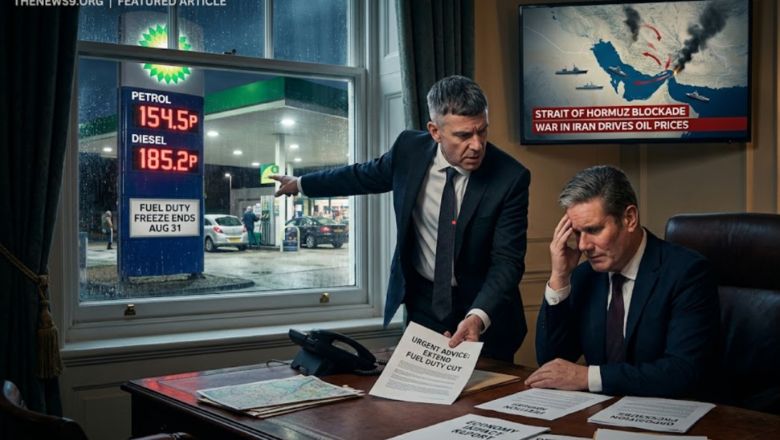
Pressure Mounts on Starmer
By The News 9 Political Desk As the geopolitical fallout from the ongoing conflict in the Middle East continues to ripple across the globe, the domestic economic impact is hitting British motorists directly at the petrol pump. Now, Prime Minister Keir Starmer is facing increasing pressure from within his own advisory ranks to intervene before the cost of living crisis deepens.
Richard Walker, the executive chair of Iceland supermarket and the government’s appointed cost of living champion, has issued a stark warning to the Prime Minister: the planned September rise in fuel duty must be scrapped.
The Geopolitical Catalyst
The root of the current domestic price surge lies thousands of miles away in the Strait of Hormuz. A vital trading artery connecting the Gulf and the Gulf of Oman, the strait has been effectively blockaded since the United States and Israel launched major military operations against Iran in late February.
With approximately one-fifth of the world’s oil supply passing through this narrow chokepoint, its closure has sent global oil markets into a frenzy, placing immense pressure on the wider world economy.
The Domestic Toll at the Pumps
For the British public, the international conflict has translated into immediate, soaring costs. According to recent data from the RAC, the average price of a litre of diesel at UK forecourts has skyrocketed by 30% to 185.2p since the conflict escalated. Petrol prices have mirrored this aggressive upward trend, climbing 16% to an average of 154.5p per litre.
Speaking on BBC Radio 4’s Today programme, Lord Walker, a Labour peer who took on the cost of living brief in February, made it clear that the current mitigations are no longer sufficient.
“The 5p fuel duty cut… is going to expire in September,” Lord Walker stated. “I think, given where we are, we do need to be thinking and talking about extending it or enlarging it.”
He further pointed to international precedents, noting that the Australian government recently implemented a much larger 14p per litre cut to their own fuel tax to shield citizens from the soaring global costs.
The Political Battlefield
The 5p per litre cut in fuel duty was initially introduced by the previous Conservative government in March 2022. Chancellor Rachel Reeves confirmed in her November budget that the cut would remain until August, followed by gradual rate increases over a five-year period. While Starmer has noted that the planned September rise will be kept “under review” in light of the war, opposition parties are seizing the moment to propose their own aggressive tax-cutting strategies.
The political landscape is becoming increasingly crowded with alternative proposals:
- The Conservatives are calling for VAT on energy bills to be entirely scrapped for the next few years.
- Reform UK has pledged to reduce VAT specifically on fuel.
- The Liberal Democrats are pushing for a substantial 10p cut in fuel duty.
Looking Ahead
As the August deadline approaches, the Starmer administration faces a critical balancing act. The government must weigh the severe fiscal implications of extending or enlarging the fuel duty cut against the very real economic pain being felt by households and businesses. With the Strait of Hormuz remaining highly volatile and opposition parties weaponizing the cost of living crisis, the upcoming decision on fuel duty will be a major test of the government’s domestic economic strategy.