The Cloud Revolution: Understanding the Backbone of Modern Technology
Introduction
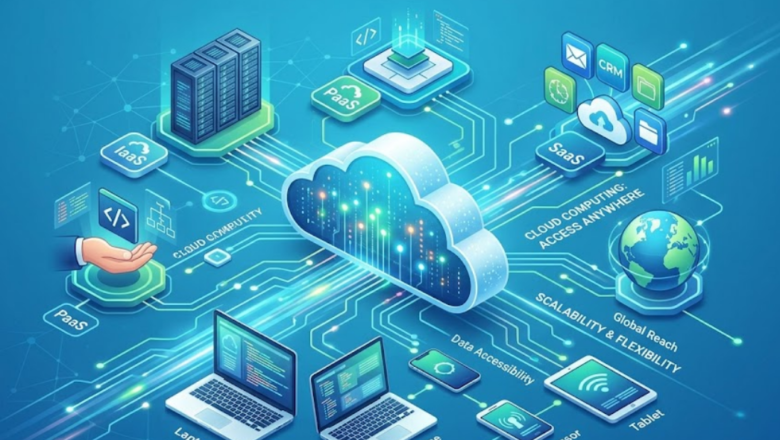
In the digital age, ‘the cloud’ is no longer a nebulous concept but the very foundation upon which modern businesses, communication, and innovation are built. It powers everything from the social media feeds we scroll to the complex databases of global corporations. Simply put, cloud technology is the delivery of computing services—including servers, storage, databases, networking, software, analytics, and intelligence—over the Internet (“the cloud”) to offer faster innovation, flexible resources, and economies of scale. Think of it as renting a massive supercomputer and endless storage, piece by piece, exactly when and where you need it, rather than owning and maintaining it yourself.
The Service Models: IaaS, PaaS, SaaS
Understanding the cloud starts with its three primary service models, which define what a user controls and what the provider manages:
Infrastructure as a Service (IaaS): This is the most basic category of cloud computing services. With IaaS, you rent IT infrastructure—servers and virtual machines (VMs), storage, networks, operating systems—from a cloud provider on a pay-as-you-go basis. It gives you the highest level of flexibility and management control over your IT resources. Examples: Amazon Web Services (AWS) EC2, Microsoft Azure Virtual Machines.
Platform as a Service (PaaS): PaaS provides a cloud-based environment with everything required to support the complete lifecycle of building and delivering web-based (cloud) applications—without the cost and complexity of buying and managing the underlying hardware, software, provisioning, and hosting. It allows developers to focus on coding. Examples: Google App Engine, Salesforce Platform.
Software as a Service (SaaS): SaaS is a method for delivering software applications over the Internet, on demand, and typically on a subscription basis. With SaaS, cloud providers host and manage the software application and underlying infrastructure and handle any maintenance, like software upgrades and security patching. Users connect to the application over the Internet, usually with a web browser. Examples: Microsoft 365, Google Workspace, Netflix.
Deployment Models: Public, Private, Hybrid
Cloud computing can be deployed in three main ways, depending on how shared the resources are:
Public Cloud: These are owned and operated by third-party cloud service providers, which deliver their computing resources like servers and storage over the Internet. All hardware, software, and other supporting infrastructure is owned and managed by the cloud provider.
Private Cloud: This refers to cloud computing resources used exclusively by a single business or organization. It can be physically located on the company’s on-site data center or hosted by a third-party service provider. A private cloud provides a higher level of security and control.
Hybrid Cloud: This model combines public and private clouds, bound together by technology that allows data and applications to be shared between them. By allowing data and applications to move between private and public clouds, a hybrid cloud gives businesses greater flexibility and more deployment options.
Key Benefits of Cloud Technology
The migration to the cloud is driven by tangible advantages that affect every aspect of an organization:
Cost Efficiency: It eliminates the capital expense of buying hardware and software and setting up and running on-site data centers—the racks of servers, the round-the-clock electricity for power and cooling, and the IT experts for managing the infrastructure.
Scalability: With cloud computing, you can scale elastically. That means delivering the right amount of IT resources—for example, more or less computing power, storage, and bandwidth—right when it is needed, and from the right geographic location.
Flexibility and Speed: Most cloud computing services are provided self-service and on-demand, so even vast amounts of computing resources can be provisioned in minutes, giving businesses a lot of flexibility and taking the pressure off capacity planning.
Global Reach: Cloud providers have massive, global networks, allowing you to deploy applications and data centers globally in minutes, improving latency for end-users.
Disaster Recovery and Reliability: Cloud computing makes data backup, disaster recovery, and business continuity easier and less expensive, because data can be mirrored at multiple redundant sites on the cloud provider’s network.
Challenges and Considerations
Despite the massive benefits, certain challenges must be addressed:
Security: This is the top concern. Organizations must rely on the cloud provider’s security measures and take their own precautions to protect sensitive data.
Data Privacy: Compliance with global data privacy regulations (like GDPR) becomes more complex when data is stored across international borders.
Dependence on Internet: Cloud computing requires a reliable internet connection to function. If your connection is down, you may lose access to your applications and data.
The Future of Cloud
The cloud is a dynamic field, constantly evolving. It is becoming the essential host for breakthroughs in Artificial Intelligence (AI) and Machine Learning (ML), providing the computational power needed to train massive models. Edge Computing, which brings data storage and computation closer to the source of data (like IoT devices), is increasingly complementing the centralized cloud. As we move forward, the cloud will cease to be a distinct technology category and will simply be the infrastructure of modern life.