US-Iran Ceasefire on the Brink: Escalating Strikes in Lebanon Spark Diplomatic Crisis
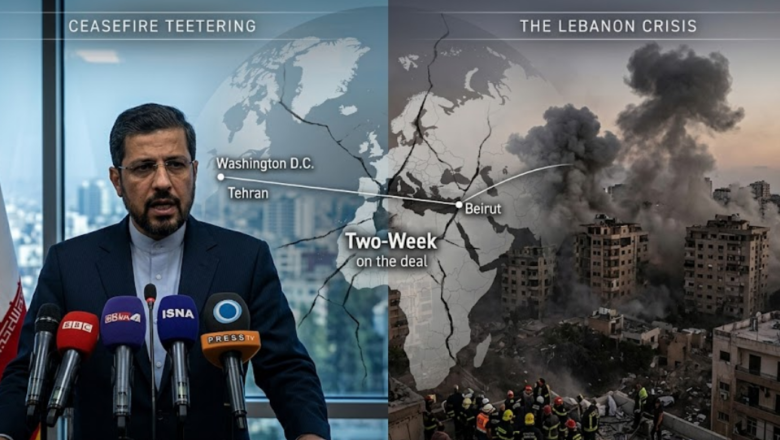
The fragile two-week ceasefire agreement between the United States and Iran is facing its most significant challenge yet following a wave of intense Israeli air strikes in Lebanon.
The strikes, which occurred on Wednesday, have sparked a heated diplomatic dispute over the scope of the truce and have led to threats of renewed regional escalation.
The “Grave Violation” Claim
In an exclusive interview with the BBC, Iranian Deputy Foreign Minister Saeed Khatibzadeh characterized the Israeli military actions as a “grave violation” of the ceasefire deal brokered earlier this week. Khatibzadeh asserted that Lebanon is explicitly covered by the two-week cessation of hostilities, a claim that is now at the heart of a deepening international rift.
“The United States must choose between war and ceasefire,” Khatibzadeh stated, warning that the agreement cannot hold if military operations continue against regional allies.
A Dispute Over the “Fine Print”
The primary point of contention remains the geographic and group-specific boundaries of the agreement. While Tehran and mediators in Islamabad maintain that the deal includes a cessation of strikes in Lebanon, both the U.S. and Israeli governments have disputed this interpretation.
U.S. officials and Israeli Prime Minister Benjamin Netanyahu have previously signaled that the ceasefire applies strictly to direct hostilities between U.S. and Iranian forces, rather than operations targeting Hezbollah. Israel has maintained that its campaign, dubbed “Operation Eternal Darkness,” is a necessary response to Hezbollah’s military infrastructure.
Rising Human Cost
The Lebanese Health Ministry reported a devastating toll from Wednesday’s operations. At least 203 people were killed in air strikes targeting what the Israeli military described as Hezbollah command centers and military sites. The high casualty count has intensified international pressure and drawn sharp condemnation from humanitarian organizations across the region.
Hezbollah’s Retaliation
Hezbollah officials confirmed on Thursday that the group had fired rockets toward Israel overnight. The militant group described the launches as a direct response to “ceasefire violations” and warned that attacks would persist until “Israeli-American aggression” in Lebanon is halted.
Despite these actions, Tehran has defended Hezbollah’s conduct. Minister Khatibzadeh claimed the group had “abided” by the ceasefire terms until the recent strikes forced a response.
The Path Ahead
As of Thursday evening, international observers describe the ceasefire as “teetering.” Diplomatic efforts are reportedly underway in Islamabad to clarify the 10-point peace plan and prevent a full-scale collapse of the agreement. However, with the Strait of Hormuz remaining a point of tension and military activity continuing in Beirut, the window for a diplomatic resolution appears to be narrowing.