The Hidden Hand: How Russian Support is Sustaining Iran Against U.S. and Israeli Operations
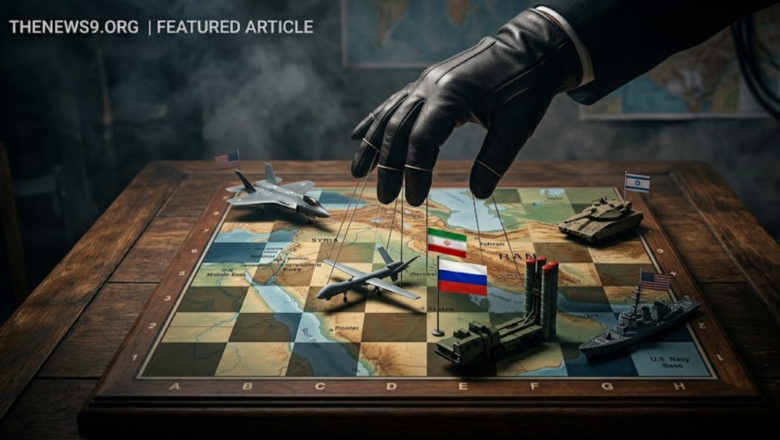
by thenews9.org
Following the initiation of major U.S. and Israeli military operations against Iran in late February 2026, the Middle East has entered a highly volatile new chapter. However, as the conflict unfolds, Western intelligence agencies and European officials have identified a critical factor preventing the rapid degradation of Iranian forces: the strategic, behind-the-scenes assistance of the Russian Federation.
While Moscow has avoided deploying direct combat troops to the region, its covert and logistical support has become a vital lifeline for Tehran. Here is an in-depth look at how Russia is actively aiding Iran, and why this support provides a massive tactical advantage against the superior conventional forces of the United States and Israel.
The Intelligence Advantage: Eyes in the Sky
The most immediate and damaging advantage Russia provides to Iran is actionable military intelligence. Before the conflict escalated, Iran was heavily reliant on its own localized radar and surveillance. Today, they are reportedly tapping into the vast network of Russian aerospace assets.
European and Ukrainian intelligence officials have pointed to recent strikes on U.S. and allied airbases in the region as a prime example. In the days leading up to these Iranian attacks, Russian intelligence satellites repeatedly mapped the facilities, providing Tehran with highly precise targeting data. By sharing satellite imagery and real-time operational intel, Russia allows Iran to:
- Bypass Defenses: Identify blind spots in U.S. and Israeli air defense networks.
- Execute Precision Strikes: Transition from blind rocket fire to highly targeted ballistic and drone strikes on American assets and regional bases.
- Assess Damage: Conduct post-strike assessments to determine if secondary attacks are necessary without exposing their own reconnaissance aircraft.
Technology, Tactics, and the Reverse Drone Pipeline
For the first two years of the war in Ukraine, Iran famously supplied Russia with thousands of Shahed attack drones. Now, the pipeline has reversed. Western intelligence confirms that Russia is currently in the midst of phased shipments of drones, medicine, and logistical aid back to Iran.
More importantly, Russia is providing advanced, battle-tested training. According to the UK Defense Ministry, Russian operatives have been instructing Iranian forces on electronic warfare (EW) and modern drone swarming tactics developed on the frontlines of Ukraine. This gives Iran the ability to jam incoming smart munitions and deploy their own drones with much higher survivability rates against Israeli and American interception systems.
A Layered Defense Network
Prior to the outbreak of the current conflict, Russia and China were instrumental in building up Iran’s Anti-Access/Area Denial (A2/AD) capabilities. Over the years, Moscow has supplied Tehran with advanced S-300 air defense systems and, more recently, reached agreements for thousands of Verba shoulder-fired anti-aircraft missiles.
Combined with Russian early-warning radar systems, Iran’s airspace is significantly more contested than it would be otherwise. This forces U.S. and Israeli pilots to operate at higher risks and expend far more time and resources to suppress enemy air defenses (SEAD) before achieving their primary strike objectives.
Diplomatic and Economic Shielding
Beyond the battlefield, Russia’s support offers Iran a crucial geopolitical safety net. At the United Nations, Russia—often alongside China—has consistently abstained from or blocked Security Council resolutions aimed at condemning or curtailing Iran’s retaliatory strikes.
Economically, the conflict has threatened critical shipping lanes, resulting in a spike in global oil prices. This dynamic mutually benefits both heavily sanctioned nations: it provides Russia with an unexpected influx of oil revenue to fund its own ongoing war efforts, while giving Moscow a strategic incentive to keep the Middle East conflict simmering. By supporting Iran, Russia effectively stretches U.S. military and financial resources across two separate, exhausting global theaters.
Conclusion
Russia’s involvement in the 2026 Middle East conflict is a masterclass in proxy warfare. By providing state-of-the-art intelligence, advanced tactical training, and robust diplomatic cover, Moscow is ensuring that Iran remains a highly resilient adversary. For the United States and Israel, the challenge is no longer just degrading Iranian military infrastructure, but overcoming the sophisticated “hidden hand” of the Kremlin that continually helps to rebuild, protect, and redirect it.